
Why do Cups Feel Hard at First?
A first-hand guide to the learning curve, what’s normal, and why the hard start is not the end
Hi, I’m Jaime, founder of Amora.

I started using a menstrual cup during the final year of my industrial design degree because I could not stop wondering why something so fundamentally better on paper still felt out of reach for so many women. They’re reusable, cost-effective over time, and a lot of people who use them swear by them. So what was getting in the way?
The more I looked into it, and the more I spoke to people, the more obvious it became that the answer was not simply “people don’t know enough”. A lot of the time, the issue was that cups can feel hard at first.
That learning curve, and the confidence gap around it, became one of the biggest things shaping Halo and the Amora brand.
Amora is built around the idea that menstrual cup users need more confidence, less friction, and support that feels human rather than clinical. Halo itself was designed to make cup care more hygienic, discreet, and practical outside the home, especially for people who want to use a cup but feel held back by the realities of real life.
So if you’ve tried a cup and thought, why does this feel so awkward?, or if you’re cup-curious but already slightly intimidated, I really want you to know this: that feeling is normal.
why do menstrual cups seem so daunting at first?
What I like to say to anyone that asks me is this:
“It’s like when you were 13 and learning to use a tampon or pad for the first time, but now you’re in your 20s”
Now, the ages of either side of the coin may vary, but the sentiment stays the same: it’s learning something totally new, far beyond the point where you imagined having to learn.
That sounds almost too simple, but it’s the honest truth from my own experience and many other women I have spoken to.
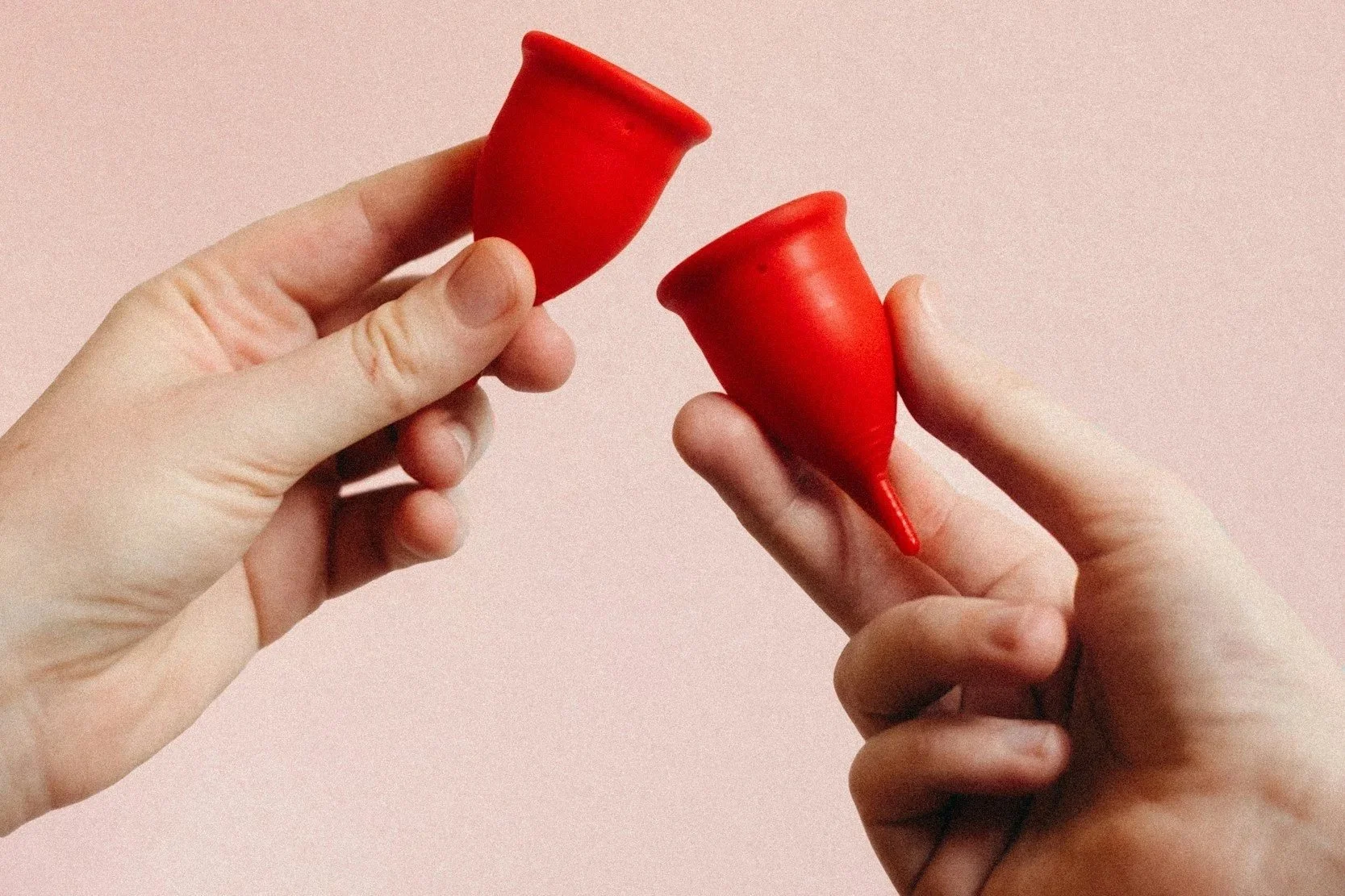
Using a menstrual cup is not just buying a different product, it’s learning a whole new routine with your body. If you have used pads or tampons your whole life, a menstrual cup can feel like a big jump. That can feel strange, fiddly, and unexpectedly hard at first.
That does not mean you are doing it badly, or that cups are not for you. It usually just means you are in the messy middle of learning something new, and at least in my experience, the only way out is through.
What’s actually normal when you first start?
Honestly, quite a lot.
It is normal if insertion takes a few tries. It is normal if you spend ages checking whether it has opened properly. It is normal if you get slightly annoyed, slightly flustered, or feel like everyone else somehow got a manual you missed.
It is also normal to need more than one cycle to feel comfortable.
I think this is one of the biggest problems with how reusable period care is sometimes talked about. The messaging can make it sound like if a cup is “right for you”, it should magically click on day one. But for loads of people, it takes practice. And that practice is not a sign of failure, it’s just part of the process.
A lot of people do not stop because the cup is objectively terrible. They stop because early friction chips away at confidence. That lack of confidence, especially for new users in shared housing, while travelling, or in student life, is something I kept seeing again and again in my research. It is one of the exact problems Amora is trying to solve.
Is there anything that makes it easier?
So much, actually.
But the biggest thing is grace. Give yourself some grace, and a bit of patience too.
Using a menstrual cup is a new experience, a new product, and a completely new feeling. Like anything unfamiliar, it takes time for it to become routine. That does not mean you are doing it wrong. It just means you are learning.
What helped me personally was giving myself proper time and space to figure it out without rushing. I sat on the toilet with some Boots own-brand lube I picked up and just experimented until I found what worked for me: the right folding technique, the most comfortable position, and the little checks that helped me feel confident it was in properly.
Because I gave myself that time, I was lucky enough to get on with the cup quite quickly. But that is just my experience, not a promise. Even if you do all the “right” things, it still might take a few tries, or a few cycles, before it starts to feel easy.
A few things that can help:
trying it for the first time on a lighter day, when you feel less pressured
testing it at home before relying on it when you’re out
using a bit of water-based lube if insertion feels awkward
trying more than one fold to see what feels easiest for your body
checking in with yourself afterwards instead of expecting instant perfection
reminding yourself that the first try does not have to define the whole experience
I also think it helps to stop expecting the first go to feel seamless. Sometimes the biggest shift is letting it be a curve, not a straight line to success.
Does struggling at first mean menstrual cups aren’t for you?
I would say in almost every case, no.
Sometimes it does mean you need a different size, a different firmness, or a different fold. Sometimes it means you need more time. Sometimes it means you need better information. Sometimes it means the cup itself is fine, but the context around using it, especially outside the house, is what makes the whole thing feel difficult.
That distinction is what you really need to take into account, because when people say, “I tried a cup and it was hard,” what they often mean is not “the concept is wrong”. They mean one or more parts of the experience felt unsupported, and that makes a huge difference.
If you’re in the awkward stage right now
I want to say this very clearly: you are not behind, you are not bad at it, and you are definitely not the only one.
The early stage can feel awkward. It can feel like trial and error. It can feel harder than you expected. That is all normal.
And if you are someone who loves the idea of a menstrual cup, but has found the reality a bit more complicated, that is exactly the kind of experience that helped shape Amora.
Final thought
I started using a menstrual cup because I wanted to understand why something so good on paper still was not working for more people in real life.
Over and over again, I came back to the same thing:
the start can feel hard, the learning curve is real, and the confidence gap is real.
That is what led me to design Halo, and it is what shaped the Amora brand as a whole. Not just making reusable period care look better, but making it feel easier, kinder, and more realistic to actually live with.
So if cups have felt hard at first, please do not take that as your answer. Sometimes it is just the beginning.
